
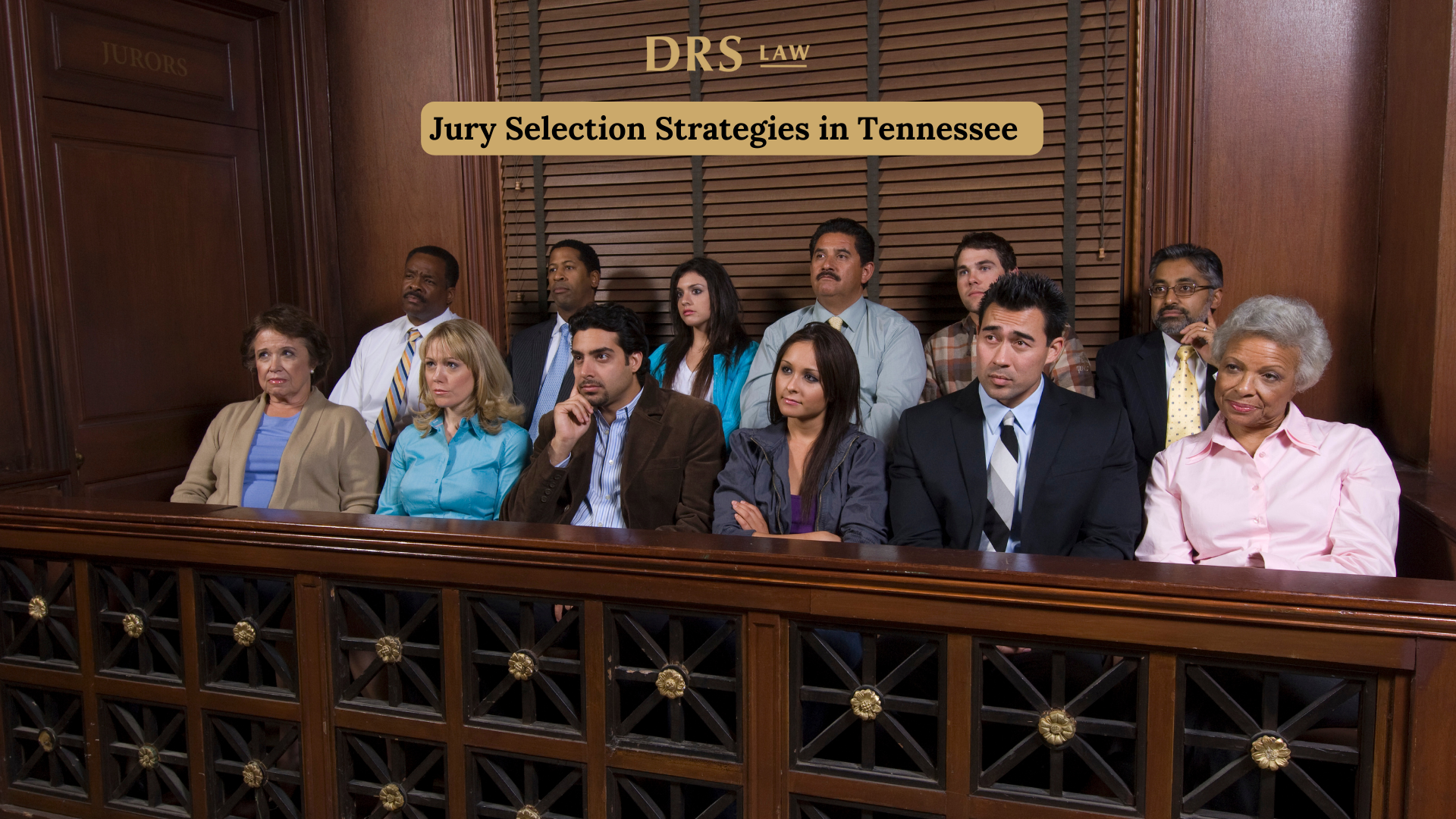
Jury Selection Strategies in Tennessee Trucking Accident Cases
Grounds for Challenges for Cause.
The Sixth Amendment of the United States Constitution and article I, section 9 of the Tennessee Constitution guarantee a right to an impartial jury. There is no limit to the number of for cause challenges. Freeman v. Blue Ridge Paper Prod., 2012 WL 12841914, at *2 (E.D. Tenn. July 10, 2012).
Jurors may be excused on account of a defect or bias/partiality.
During jury selection in Tennessee, prospective jurors may be excused by a trial court for cause due to any ground for challenge for cause provided by law. Tenn. R. Crim. P. 24(c). Challenges for cause to a potential juror are described as either
propter defectum
(on account of some defect) or propter affectum
(on account of bias/partiality). The propter defectum
class traditionally includes people suffering from severe mental illness, severe intellectual disability, and other circumstances that render the prospective juror unable to intelligently weigh the evidence presented at trial. SeeDurham v. State
(1945) 182 Tenn. 577,188 S.W.2d 555.
Attorneys May Question Prospective Jurors.
TRCP 47.01 – Examination of Jurors provides that:
The court shall permit the parties or their attorneys to conduct the examination. At or near the beginning of jury selection, the court shall permit counsel to introduce
themselves and make brief, non-argumentative remarks that inform the potential jurors of the general nature of the case. The court, upon motion of a party or on its own motion, may direct that any portion of the questioning of a prospective juror be conducted out of the presence of the tentatively selected jurors and other prospective jurors.
During jury selection in Tennessee, inquiry may be made into liability insurance. Lovin v.. Stanley , 493 S.W.2D 725, 727 (Tenn. App 1973); Burks By Burks v. Harris, 1992 WL 322375)(Tenn. Ct. App. Nov. 10, 1992). Tennessee affirms that a party’s counsel has the right to question prospective jurors about insurance . Luchessi v. Barnard, 7 Tenn. App. 353 (Tenn. Ct. App. 1928).
The Keys to Effective Challenges to Jurors.
Many very good lawyers approach voir dire as the art of selecting a jury. My strategy is actually quite the opposite: voir dire is the art of deselecting your jury.
How do you do this? Go to the bad parts of your case by identifying jurors that you should exercise preemptory challenges: identify prejudice; alcohol or drug use; injury not on scans. Dont talk about your good points ) (e.g., your clients pain and suffering). Only go into bad things to get jurors off for cause. Tell the jury that you are going to ask them about certain issues in dispute to see if we can get a fair trial.
You may have the greatest liability facts ever and catastrophic injuries, but unless you select a jury that will allow your client a level playing field, then you will be facing a defense verdict. So, the theme here is not to ask feel-good, positive questions at the start of jury selection but focus on the sticking points.
Other keys to effective challenges during jury selection in Tennessee include:
- Dealing with how the judge handles voir dire.
- Using a jury
- Writing down and practicing key questions that will expose bias/unfair predisposition.
- Explaining the concept of an even/level playing field for both parties.
Peremptory Challenges – When and How to Use Those Precious Few
For details on peremptory challenges in Tennessee trucking accident cases, see: T.C.A. § 22-3-104. Peremptory challenges; consolidated cases.
Spouses in loss of consortium claims are allowed four challenges. Tuggle v. Allright Parking Systems, 922 S.W. 2d 105 (Tenn. 1996).
In wrongful death cases if there is more than one beneficiary eight challenges are allowed. O’Dneal v. Baptist Mem’l Hosp. 556 S.W.3d 759(Tenn. Ct.App. 2018).
The number of peremptory challenges may not exceed eight a side. T.C.A. § 22-3-104.
The trial court divides the challenges between parties on the same side. T.C.A. §22-3-105.
Peremptory challenges must be exercised before the jury is sworn. State v. Simon , 635 S.W. 2d 498, 510 (Tenn. 1982).
Understanding Opposing Counsel’s Striking Strategy
- A questionnaire may expose the other sides key issues and help you craft your voir dire questions .
- The most important task is for you is to identify the key issues in the case and anticipate how the opposite side is going to address those issues.
- Poisoning the panel.
Alternate Juror Selection
- R. Civ P. 47.02.
- Various amendments to R. Civ. P. 47 were adopted effective July 1, 2003.
Preservation of Error
During Voir Dire
- Exhausting all peremptory challenges is necessary to have a valid basis for appealing the denial.
- Any error in jury selection is harmless unless the jury who heard the case was not fair and impartial. State v. Thompson, 768 S.W.2d 239, 246 (Tenn.1989).
- The challenging party must also ask the court to excuse the juror for cause and specify the grounds for doing so. Dukes v. State, 578 S.W.2d 659, 664 (Tenn.Crim.App.1978)
- State for the record that you accept the jurors subject to your denied challenges for cause for X, Y, Z jurors.
- If the judge doesn’t ask you if you accept the panel, be proactive and make a statement and objection for the record before the panel is sworn in.
Hiding Your Keeps, Rehabilitating Jurors, and Defending a Cause Challenge
- Voir dires aim is to select jurors to reveal their bias in voir dire and strike jurors who cannot be fair by deselecting your problem
- But an equally key strategy is to keep jurors who are prone to support your case.
- Phrase questions so that only jurors with views against you are likely to choose one of the answers, leaving the majority of jurors, including your good jurors, hidden in the pack.
- Thus, the goal of Hiding your keeps .
- Tennessee courts recognize that
rehabilitation of a biased prospective juror must come with great care. Cooper v. State, 847 S.W.2d 521, 535 (Tenn. Crim. App. 1992) - Often, judges, step in and decide to question the juror, by eliciting rehabilitative answers from prospective jurors.
- A recent study conducted by researchers at Arizona State University found that rehabilitated jurors maintained their bias throughout the trial, despite agreeing that they could be fair at “stunningly high rates.
- Jessica M. Salerno (FNa1) et. al., The Impact of Minimal Versus Extended Voir Dire and Judicial Rehabilitation on Mock Jurors’ Decisions in Civil Cases
, 45 Law & Hum.
336 (2021). - To counter illusory rehabilitation it is incumbent upon you as trial lawyer to nail down the jurors bias during your voir dire such as by asking:
- Is there anything defendants attorney could say, or that the judge could say that would get you to change your feelings/position?
Defending a Cause Challenge
- Keep notes as to exactly what the juror said that raised the cause for concern (or ask the court reporter to read you back the Q/A).
- See Christina Marinakis, JD, PsyD, Do You Save or Rehabilitate Jurors in Voir Dire ? Available at: https:// expertservices.com /insight/save-rehabilitate-jurors-voir-dire/.
Contact the Tennessee Trucking Accident Lawyers at DRS Law today
We are here to help you get the compensation you deserve. Contact DRS Law today.
We are available to meet with you Monday through Friday from 8:00 AM to 5:00 PM.