
How We Turned a $675,000 Settlement Out of a Case a Big Firm Wouldn't Touch

Most people think premises liability cases are just slip-and-fall claims — someone twists an ankle or bruises a knee on a wet floor. That's a narrow and incomplete view of the law. Premises liability actually covers any unsafe condition on a property, whether it's a store, an apartment complex, a stadium, or any location where a business operates.
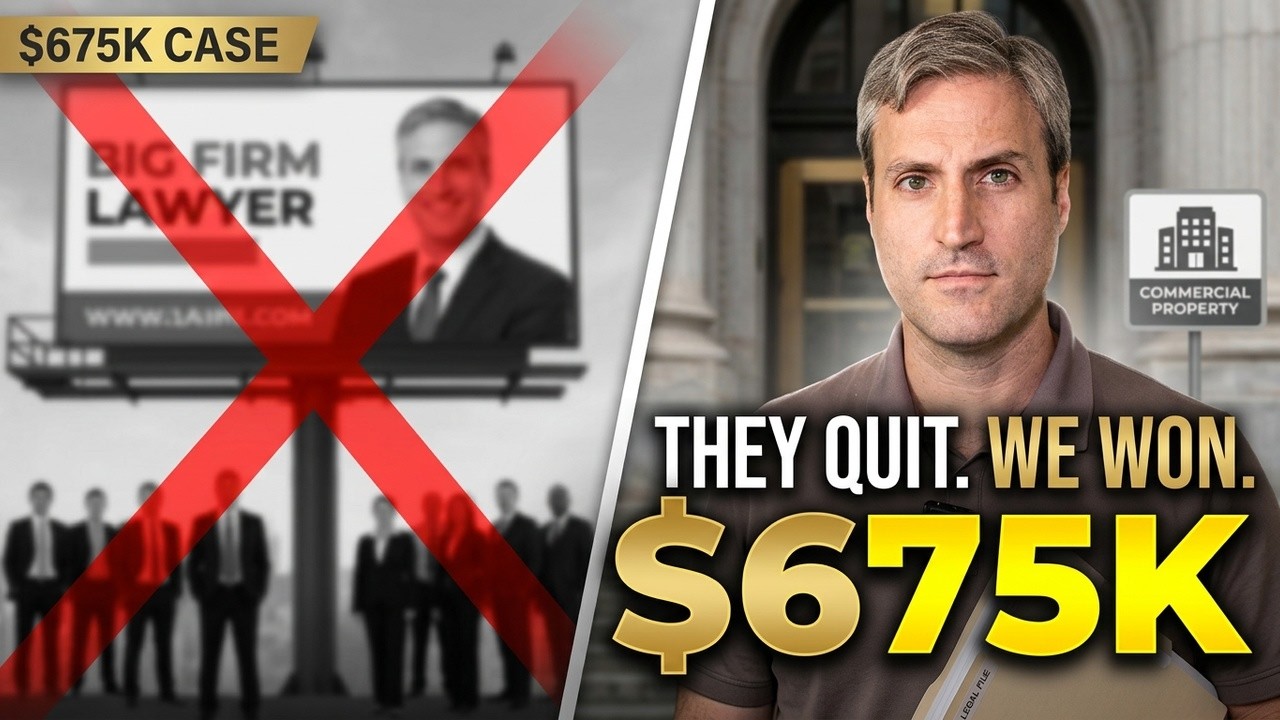
This is the story of a case that a national advertising injury firm looked at, decided was too much work, and walked away from. Our client called DRS Law instead. After a deep investigation, we secured a $675,000 settlement. Here's exactly how that happened — and what it can teach you if you've been seriously injured on someone else's property.
Every case is different, and no outcome is guaranteed. This case isn't necessarily representative of what every premises liability claim will recover. But the investigative process behind it illustrates how thorough case-building can significantly increase the value of a claim.
What Actually Happened
Our client went into a store and got into a dispute with a store clerk over the retailer's bag policy — specifically, whether she could carry two bags instead of one. The disagreement escalated. The clerk became enraged and hurled a bottle directly at her face, causing a permanent eye injury.
This is where most law firms would run in the other direction — and one already had.
Why Big Firms Turn Away Assault Cases
When an injury results from an intentional act — like an assault — rather than simple negligence, liability insurance often doesn't apply. Insurance policies covering businesses typically exclude intentional or criminal misconduct. From a purely surface-level read, that means there may be no insurance money available to recover, which is often reason enough for high-volume firms to pass on a case entirely.
That's exactly what happened here. The big firm that initially took the case never even attempted to work around this issue — they took one look at the police report and dropped it.
Finding a Legal Path Around the Insurance Exclusion
There's an old Tennessee case out of Memphis where a lunch counter employee physically dragged an unruly patron outside and assaulted him. The court found that the assault still occurred within the "course and scope" of employment because it arose directly out of a dispute connected to the business itself — the patron had caused a disturbance inside the restaurant, and the employee's response, however extreme, was tied to that interaction.
We applied that same legal theory here. The bottle-throwing incident stemmed directly from a dispute over store policy during a normal customer transaction. Because the assault arose out of the business interaction itself, we successfully argued it fell within the clerk's course and scope of employment — opening the door to insurance coverage that the previous firm assumed didn't exist.
The Police Report Was Wrong — And Dangerously So
The police report the first firm relied on was riddled with hearsay. It largely repeated the store's version of events, which falsely accused our client of attempting to steal from the store. Had that firm bothered to investigate — interviewing witnesses, pulling detective notes, requesting the full case file — they would have quickly discovered the accusation was untrue.
We did that work. Specifically, we obtained:
-
The full investigative file from the detective assigned to the case
-
911 call recordings
-
Body camera footage from responding officers
What emerged was a completely different picture than the one the store had tried to paint.
The Store's Concealment Became a Legal Weapon
The body cam footage and detective notes revealed something critical: when detectives asked the store for its surveillance footage, the store resisted turning it over. The detective documented this reluctance directly in his notes, describing the store as "not being forthcoming."
That single detail carried enormous legal weight. Tennessee law caps non-economic damages — pain and suffering — in most personal injury cases. However, that cap disappears entirely if a defendant falsifies, destroys, or conceals evidence. A detective's documented observation that the store withheld key evidence potentially unlocked the door to uncapped liability, meaning there was no ceiling on what our client could recover.
The Body Camera Footage Revealed Even More
The footage also suggested that immediately after the assault, the clerk who threw the bottle vanished from the premises. Investigating officers appeared to suspect that other store employees may have been concealing him somewhere on-site — even in a back room or freezer. That kind of behavior, if borne out in discovery, painted an increasingly damning picture of the store's conduct.
"Putting the Black Hat" on the Defendant
Not every serious injury case involves egregious misconduct. Sometimes a defendant makes an honest, even sympathetic, mistake that leads to catastrophic harm. Those cases can be harder to value because a jury may feel some empathy toward the defendant.
This case was different. Between the criminal assault itself, the employee's disappearance, the suggestion that coworkers helped hide him, and the store's apparent concealment of surveillance footage, the conduct started to look increasingly intentional — not accidental. That combination can open the door to punitive damages, which exist specifically to punish a defendant's conduct rather than simply compensate the injured party.
The Photo That Changed the Defense's Strategy
One of the most important pieces of evidence in this case didn't come from a detective file — it came from our client herself. During the altercation, she took a photo of the store clerk standing behind the register.
That photo mattered because the store's initial defense strategy was to claim the assailant wasn't actually an employee at all — just another customer who happened to be in the store. The photo, showing him behind the counter at the register, undercut that defense before it could gain any traction.
What This Case Teaches Anyone Injured on Someone Else's Property
If you're ever injured at a business, apartment complex, or any other property, this case highlights several steps that can meaningfully affect the value of a future claim:
-
Take photos if you're able to. Document the scene, the people involved, and anything relevant — you never know what the defense will later claim.
-
File a police report. Body camera footage captured at the scene is far more reliable than testimony given months later, once memories fade or become self-serving.
-
Push for the full investigative file, including detective notes — they can reveal whether a defendant was cooperative or evasive with law enforcement, which carries real legal consequences.
-
Get medical treatment promptly and consistently. Insurance adjusters and defense lawyers frequently look for "gaps in treatment" to argue an injury wasn't serious — even gaps caused by something as ordinary as holiday scheduling.
Why the Firm You Choose Matters
The first firm our client contacted operates on a business model built around resolving cases quickly. That model doesn't leave room for the kind of investigation this case required — subpoenaing body camera footage, filing open records requests for detective notes, or interviewing the investigating officer directly. High-volume firms are often structured to close cases fast, sometimes accepting a discounted settlement just to move on to the next file.
Cases like this one show why that approach can leave real value on the table. Thorough investigation — uncovering what actually happened, what evidence exists, and what the other side may be trying to hide — is often what separates an average settlement from one that reflects the true severity of what happened.
If you've been seriously injured on the property of a business, apartment complex, or other venue, the depth of investigation behind your case can make a significant difference in its outcome.
Contact DRS Law Personal Injury Lawyers today to discuss what happened and explore your legal options.